"I can't sing" is one of the sentences we hear most often in trial lessons. It's usually wrong. True amusia – an ear that genuinely can't tell pitches apart – affects only a few percent of people. Everyone else hears the note perfectly well and still misses it. Pfordresher and Brown studied this in 2007: most "off-key" singers recognise pitch as well as anyone. What's missing is control – the link between what the ear wants and what the larynx does.
And control can be trained. Like riding a bike: nobody learns it from a book, but almost everyone learns it given enough feedback. On a bike, the feedback is the ground. In singing, unfortunately, it's invisible – you hear yourself differently from how you sound, because your skull vibrates along. That's exactly where a tuner helps: it makes visible what you're singing right now.
Our tuner with singing trainer runs free in the browser, no sign-up. Allow the microphone and go. The five exercises below take about ten minutes in total.
First: what the display means
The tuner shows two things: the note you're closest to (say, A or F#) and how far off you are – in cents. One hundred cents make a semitone, the distance between two neighbouring piano keys. Deviations under about ten cents go unnoticed by almost everyone; from twenty to thirty cents it sounds "off". So your goal isn't the perfect centre but a calm stay in the green zone.
Two things that confuse beginners: male voices sing an octave below most reference notes – the letter is still right, only the number next to it is one lower. And the needle always trembles at first. That's not the tuner's fault, that's your voice not yet knowing where to go.
One more thing: singing should never hurt. If it scratches or strains – pause, water, start lower. A quiet "mmm" with closed lips for twenty seconds warms up the voice; only then the exercises.
Exercise 1: hold a note (2 minutes)
Choose "Hold the note" in the singing trainer. Sing a comfortable "ooo" – not high, not loud, somewhere in the middle of your speaking voice – and watch how long you stay in the green. At first it may be two seconds. Then four. The goal: ten seconds without slipping.
What you're learning here is breath control. A wobbly note is almost always a wobbly breath. It helps to put a hand on your belly: it moves out when you breathe in, slowly in while you sing. Shoulders stay down. Do this two minutes a day and in two weeks you'll have a different voice.
Exercise 2: echo the note (2 minutes)
"Echo": you hear a note and sing it back. First the note, then you. What matters is the moment in between – picture the note inside for an instant before you open your mouth. It sounds esoteric, but it's the heart of the matter: good singers "hear" the note a tenth of a second before they sing it. The voice follows the image, not the other way round.
If you miss, don't stop – slide: pull the note you're singing slowly up or down until the needle reaches the centre. Sliding isn't cheating, it is the exercise – your larynx learns which movement makes which note.
Exercise 3: the siren (1 minute)
No button for this one, just the plain tuner: sing an "ooo" and glide slowly like a siren from your lowest comfortable note to your highest and back. Watch only the letters. You'll see how big your range is right now – and where the voice "flips", usually somewhere between two notes in the middle. That's where the transition between chest and head voice will live later. For now it's enough to know the spot exists.
The siren smooths out the voice. Do it regularly and the jumps between notes disappear – the ones that feel like "I can't hit the note".
Exercise 4: the scale (2 minutes)
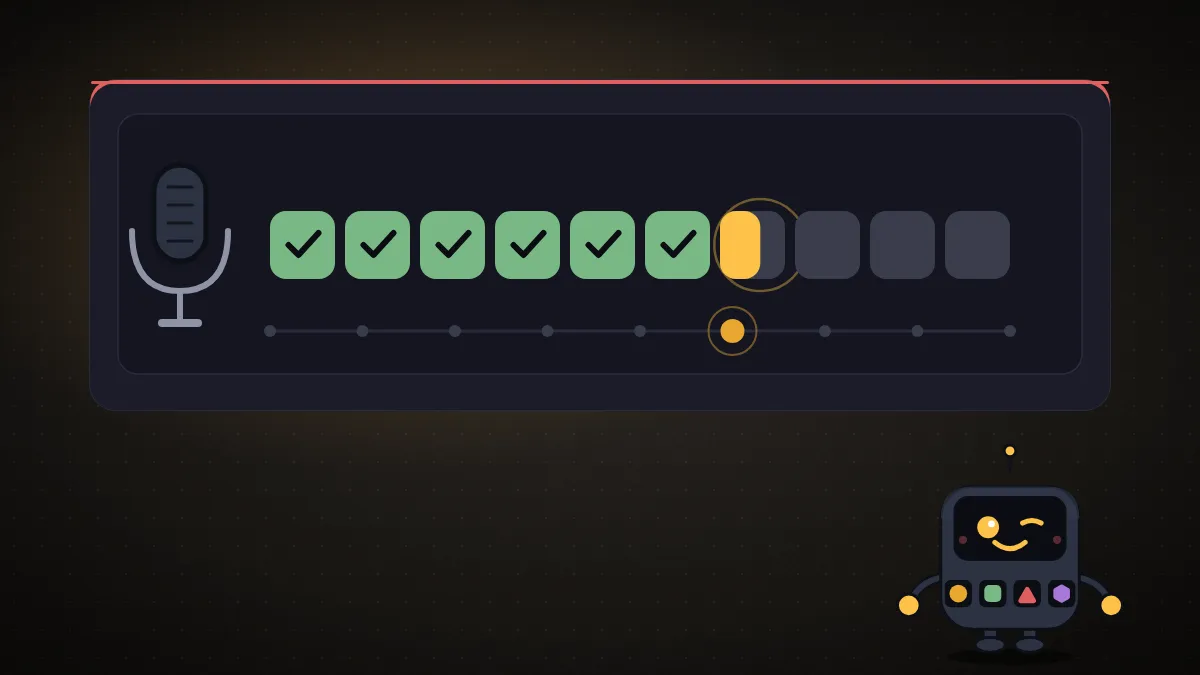
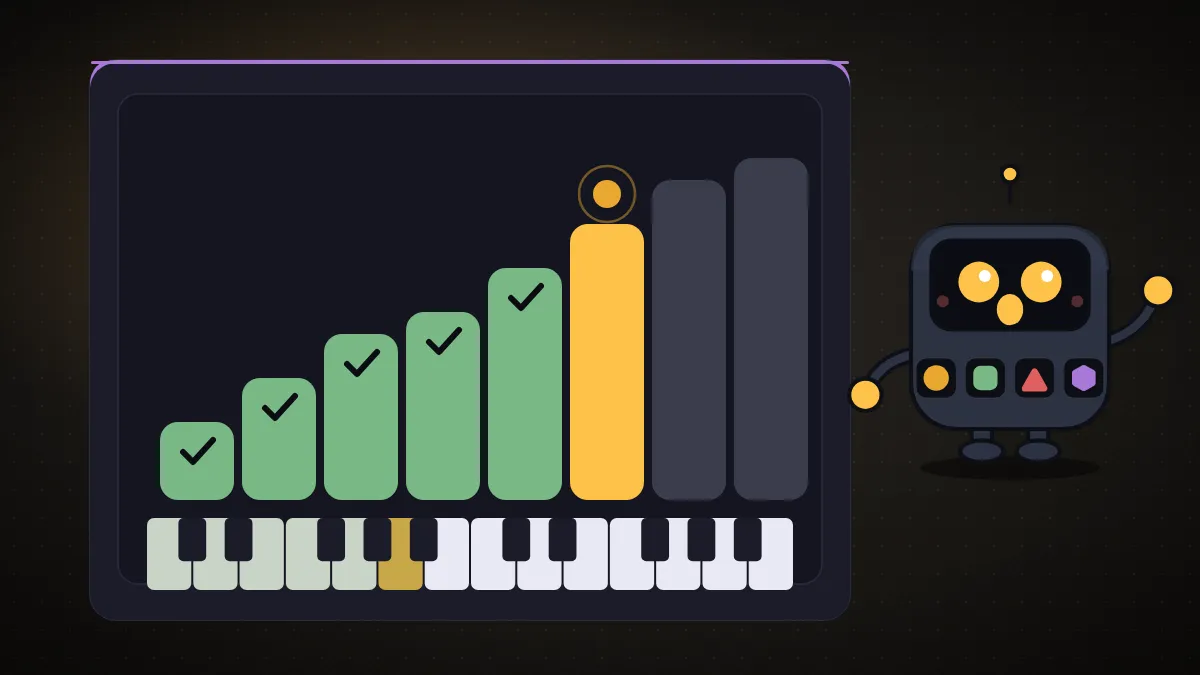
"Scale": step by step up one octave, each step turning green only once it sits. This is where most people stumble first – not on the single notes but on the distances. Between the third and fourth step there's only a semitone, between the others a whole tone. The ear knows the major scale from a thousand songs; the voice still has to learn to measure it.
A trick from the lesson room: sing the scale on numbers – one, two, three, four – instead of "la". Numbers give the brain an anchor. And slow and right beats fast and roughly. Nobody will ever hear how long the octave took you.
Exercise 5: intervals (2 minutes)
"Intervals": third, fourth, fifth from the root. These are the leaps melodies are made of. A fifth opens many children's songs and anthems; a fourth is the jump countless choruses start with. Hit these three leaps reliably and you can sing most pop melodies without thinking.
Find a song of your own that starts with each interval – yours, not one from a list. The memory of the interval then hangs on a melody you already know, and that holds better than any table.
For kids: play rather than practise
Children don't need a cents display. For them there's Fred sings & plays: balloon flight, hurdle run, echo bird – games you steer with your voice while learning exactly the same things: hold a note, hit a note, leap between notes. Five minutes a day is plenty. What makes sense at which age is on our page about music lessons for kids.
How often? Short and daily
Ten minutes a day beat an hour on Sunday – one of the most robust findings in learning research (Cepeda and colleagues pooled hundreds of studies on it in 2006). For the voice there's one more reason: it's a muscle, and muscles grow during the breaks. So a few minutes every day before brushing your teeth rather than one marathon a week.
After three or four weeks you'll notice it first while singing along in the car: you're on the note without looking.
When a teacher is faster
The tuner shows you whether you hit the note. It doesn't tell you why not – breath too shallow, jaw tense, tongue in the way. A human sees and hears that in ten seconds, and that's what singing lessons in Munich are for: technique, vocal health, repertoire – and eventually a band. For children and teenagers the trial lesson is free; times and prices are on that page. The exercises here stay your homework either way – your teacher will be delighted if you arrive with ten seconds of clean "ooo".
Frequently asked questions
Do I need a microphone? No, the one built into your laptop or phone is enough. What matters is a quiet room: the dishwasher and the TV confuse pitch detection.
The tuner shows a different letter than I expect. Check the octave first (see above). If you're a third off, that's normal at the start – exercises 2 and 4 exist for exactly this.
Can you still learn to sing at 40? Yes. The voice changes with age, but control can be learned at any age – adults often faster than children, because they understand what they're doing.